Big Axe Nackawic: Visiting the World's Largest Axe, Parking, Photos and Nearby Attractions
The World's Largest Axe in Nackawic, New Brunswick, is more than an unusual roadside attraction. Standing above the Wolastoq (Saint John River), this enormous monument celebrates the region's forestry heritage and introduces visitors to one of western New Brunswick's distinctive waterfront communities.
For travellers exploring the province, the Big Axe is an easy landmark to include in a road trip. It is located just minutes from the Trans-Canada Highway, making it convenient for visitors travelling between Fredericton, Woodstock and other destinations in the Saint John River valley.
Yet the best way to experience the Big Axe is not simply to stop, take a photograph and leave.
The surrounding waterfront, nearby Big Axe Marina, local restaurants and scenic river landscape make Nackawic worth exploring at a slower pace.
Whether you are planning a family outing, travelling through New Brunswick or discovering the region for the first time, this guide explains where to find the Big Axe, what to expect when you arrive and how to turn a short visit into a memorable day.
Where Is the World's Largest Axe in New Brunswick?
The World's Largest Axe is located at 152 Otis Drive in Nackawic, New Brunswick, beside the Wolastoq (Saint John River).
The monument stands within the community's waterfront area, close to public recreational spaces and the Big Axe Marina.
Nackawic is part of the municipality of Nackawic-Millville in western New Brunswick, within the wider Fredericton Capital Region.
Its position near the Trans-Canada Highway makes the attraction particularly convenient for road trippers.
Visitors approaching from Fredericton or Woodstock can follow highway directions toward Nackawic and continue to the waterfront.
Using the complete street address in a navigation app is the simplest way to reach the monument.
Once you arrive, the setting immediately distinguishes the Big Axe from many roadside attractions. Instead of standing beside a busy commercial strip, it overlooks a broad stretch of river, with wooded hills and community spaces nearby.
This waterfront location is an important part of the experience.
How Big Is the Big Axe in Nackawic?
The Big Axe stands approximately 15 metres, or 49 feet, high and is widely recognized as the World's Largest Axe.
According to Destination Nackawic, the monument weighs approximately 55 tonnes and features a stainless-steel axe head with a large wooden handle.
The axe head measures approximately seven metres across.
The structure rests on a concrete base designed to resemble an enormous tree stump. Measuring roughly 10 metres across, the stump also functions as a community stage.
These dimensions are difficult to appreciate until you stand nearby.
From a distance, the monument appears large but relatively simple. As you approach, the proportions become more striking.
The sweeping handle, broad metal blade and massive base turn an everyday forestry tool into a landmark visible across the waterfront.
That scale makes the Big Axe particularly popular with photographers and families.
A person standing near the monument provides an immediate sense of its size, creating the kind of photograph that explains why visitors stop to see it.
Why Was the World's Largest Axe Built?
The World's Largest Axe was commissioned in 1991, when Nackawic received the designation of Forestry Capital of Canada.
The monument was created to recognize the importance of forestry to the community and the province.
For generations, New Brunswick's forests have supported employment, transportation, manufacturing and community development.
In Nackawic, the relationship between forestry and everyday life became especially significant through the local pulp and paper industry.
The town developed during a period of major change along the Saint John River, including construction of the Mactaquac Dam and the establishment of the Nackawic pulp mill.
Forestry helped shape the community's economic identity, while the river and surrounding landscape influenced where people lived and worked.
The Big Axe was intended to recognize that connection.
Its message extends beyond the history of logging. It acknowledges the people whose work supported families, businesses and communities throughout the region.
Understanding this background changes how visitors experience the monument.
What initially looks like a playful oversized sculpture becomes a symbol of local history, industry and resilience.
Who Built the Big Axe in Nackawic?
The Big Axe was designed and constructed by a company in nearby Woodstock, New Brunswick.
Destination Nackawic recounts an unusual detail from the monument's installation: its enormous size made transportation a challenge.
At approximately seven metres wide, the structure required careful planning to move along public roads.
The journey was arranged for an early Sunday morning to reduce disruption to traffic.
This story adds a human dimension to the landmark.
The Big Axe was not simply ordered and placed beside the river. Its construction and transportation required coordination, technical skill and local determination.
The finished monument became a lasting reminder of Nackawic's 1991 forestry designation.
More than three decades later, it continues to attract visitors who may know little about the town before arriving.
For many, the photograph is the beginning of an introduction to Nackawic's history.
Where Can You Park When Visiting the Big Axe?
Visitors should navigate to 152 Otis Drive, Nackawic, and look for designated public parking in the waterfront area.
The Big Axe is situated within an established community recreation and tourism area, rather than along a highway shoulder.
This makes it more suitable for a planned stop than attractions where visitors must pull over beside traffic.
However, parking arrangements can vary during festivals, community celebrations, construction and other waterfront activities.
Follow posted signs and use designated spaces.
Do not assume that areas used for boat trailers or marina operations are available for ordinary visitor parking.
If you are travelling with a motorhome, camper or large trailer, confirm suitable parking before arrival.
The nearby marina has operational requirements that may differ from those of the monument itself.
For visitors with mobility concerns, it is also worth checking the location of accessible parking and the condition of the route between the parking area and the monument.
A little preparation makes the visit easier, especially when travelling with young children or a larger group.
Is the World's Largest Axe Free to Visit?
The Big Axe is an outdoor public landmark, and there is no advertised admission ticket for viewing the monument.
Visitors can enjoy the landmark as part of a waterfront outing without booking a guided tour.
Because the attraction is outdoors, the experience depends partly on weather and the condition of the surrounding public space.
Summer and early autumn are particularly appealing for visitors who want to spend additional time walking near the river.
In winter, snow and ice may affect access to parts of the waterfront.
The monument itself is a permanent attraction, but visitors should not assume that nearby facilities, washrooms or seasonal services are always available.
Check current local information if you require specific amenities.
For most travellers, the simplicity of the visit is part of its appeal.
You can arrive, appreciate the scale of the monument, take photographs and decide how much more of the waterfront you want to explore.
What Are the Best Photo Spots at the Big Axe?
The best photographs capture both the monument's enormous proportions and its riverfront setting.
Because the Big Axe is so large, choosing where to stand matters more than it might at a typical roadside attraction.
Photograph the Entire Axe From a Distance
Begin far enough away to include the handle, axe head and concrete stump in the frame.
This provides a complete view of the structure and helps communicate its distinctive shape.
A wide-angle camera lens can be useful, but avoid standing so close that the handle or blade becomes distorted.
Include a Person for Scale
A photograph with someone standing safely near the base shows just how large the monument is.
This is often more effective than photographing the structure alone.
For families, group photographs can become memorable reminders of a New Brunswick road trip.
Capture the Riverfront Setting
Move to a suitable public vantage point where you can include the surrounding landscape.
The contrast between the metal axe head, wooden handle and natural river valley creates a distinctive composition.
Photographs that include the environment also help explain why the attraction belongs in Nackawic.
Visit During Softer Light
Early morning and late afternoon can produce more flattering light than the middle of a bright summer day.
The metal blade may reflect strong sunlight, creating glare in some photographs.
Changing your position slightly can help reduce reflections.
The waterfront is also known for its evening views, making late afternoon a worthwhile time to visit when conditions are favourable.
Always remain within public areas and respect any barriers around the monument.
When Is the Best Time of Year to Visit the Big Axe?
The Big Axe can be appreciated throughout the year, but late spring through early autumn generally provides the most comfortable conditions for combining the landmark with other waterfront activities.
In summer, visitors can enjoy the green river valley, longer daylight hours and the possibility of spending time at the marina.
The waterfront often feels especially inviting when boats are on the water and people are gathering outdoors.
Autumn brings changing foliage to the surrounding hills.
For photographers, the combination of colourful trees, open water and the monument's metallic surface offers a different perspective.
Winter changes the atmosphere considerably.
Snow around the concrete stump and bare trees along the river can create striking photographs, but icy surfaces and colder temperatures may limit walking.
Spring offers another transition as the waterfront becomes active again.
The best season ultimately depends on whether you want a quick landmark visit or a longer outing that includes boating, walking and dining.
What Else Can You See Near the Big Axe?
The Big Axe is a natural starting point for exploring Destination Nackawic because several of the community's defining experiences are connected to the riverfront.
Explore Big Axe Marina
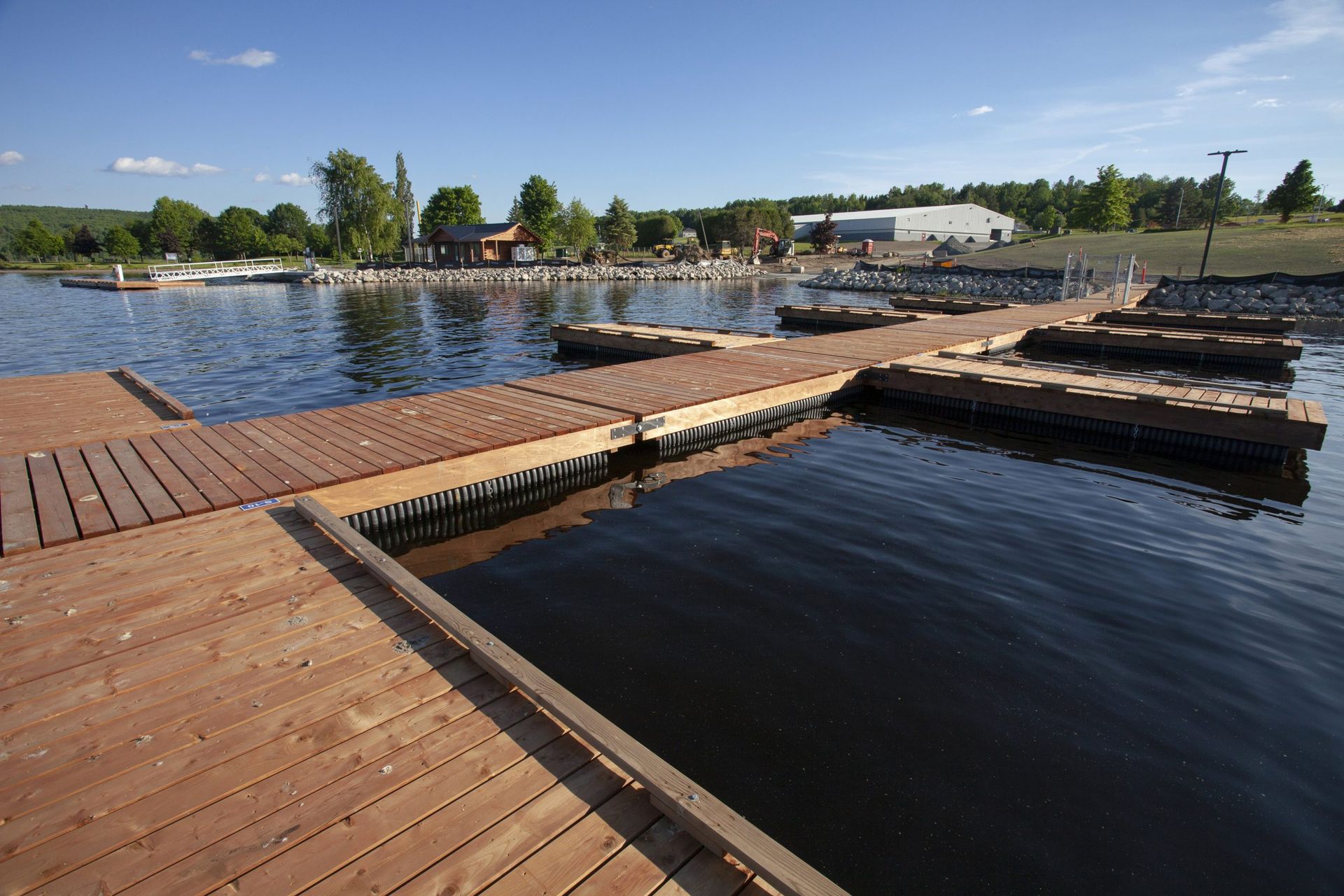
Big Axe Marina is a nearby waterfront destination offering boating facilities and seasonal recreation.
Destination Nackawic lists boat launching, docking, a fuelling station, washing facilities, kayak rentals and water bikes among its services.
The marina also has public washrooms, including wheelchair-accessible facilities.
For visitors who are not planning to go boating, the marina provides another opportunity to appreciate the river and observe activity along the waterfront.
Rental services, staffing and operating hours may vary by season, so confirm availability before arriving.
Walk Along the Nackawic Waterfront
The waterfront is one of the community's most appealing places to spend time.
A walk near the river offers views of the Mactaquac Headpond, wooded hills and the surrounding recreational area.
Visitors can take photographs, watch boats or simply enjoy a quiet moment beside the water.
The experience does not require a complicated itinerary.
A short walk after visiting the monument can turn a brief roadside stop into a more relaxed introduction to Nackawic.
Discover the Community's Forestry Heritage
The Big Axe is an ideal place to begin learning about Nackawic's relationship with forestry.
Its history connects to the development of the town, the pulp and paper industry and the broader economic story of western New Brunswick.
Visitors interested in local history can use the monument as a starting point for understanding how the community developed around the river and its industries.
Explore Local Dining
A visit to the Big Axe can easily become part of a lunch outing.
Destination Nackawic features local dining options, including the Waterfront Pub and other independently operated businesses.
Check current opening hours before planning a meal, particularly outside the main summer season.
Taking time to visit a local restaurant offers another perspective on the community beyond its best-known landmark.
Can You Visit the Big Axe and Big Axe Marina on the Same Trip?
Yes. The Big Axe and Big Axe Marina are both part of Nackawic's waterfront area, making them a natural combination for visitors.
Start with the monument and allow time for photographs.
Then explore the surrounding waterfront and continue toward the marina using designated public routes.
If you are interested in boating or paddling, check the marina's services before your visit.
The marina provides access to the Mactaquac Headpond, a broad section of the Saint John River used for recreational boating and fishing.
Visitors without boats may be interested in seasonal kayak or water bike rentals.
Water activities require more preparation than visiting the monument.
Review weather conditions, rental rules, personal flotation device requirements and any applicable boating regulations.
If you prefer to stay on land, the waterfront still offers plenty of opportunities to enjoy the scenery.
The important point is that the Big Axe and marina complement one another.
One tells the story of Nackawic's forestry heritage. The other reflects the community's growing connection to waterfront recreation.
How Much Time Should You Spend at the Big Axe?
Allow approximately 15 to 30 minutes for a straightforward visit to the monument, including photographs and a look around the immediate area.
This is a planning estimate rather than an official recommended visit duration.
If you want to explore the waterfront, allow at least an hour.
Visitors planning lunch, marina activities or a longer walk may prefer to set aside several hours.
Type of visitSuggested timeWhat to includeQuick road trip stop15 to 30 minutesMonument and photographsRelaxed waterfront visit1 to 2 hoursBig Axe, river views and walkingHalf-day outing3 to 4 hoursLandmark, marina area and local mealFull-day explorationFlexibleWaterfront, dining and additional regional activities
The most enjoyable approach is often to leave some time unplanned.
You may find yourself lingering beside the river, taking more photographs than expected or deciding to explore another part of the community.
Is the Big Axe Accessible for Families and Visitors With Mobility Needs?
The Big Axe is an outdoor attraction within Nackawic's waterfront area.
Families can appreciate the monument without purchasing tickets or committing to a long activity.
Children often enjoy comparing their own height with the enormous structure.
However, visitors should distinguish between the monument's general public accessibility and the availability of specific accessible routes or facilities.
Surface conditions, slopes, parking arrangements and seasonal maintenance can affect the experience.
Destination Nackawic identifies wheelchair-accessible washrooms at Big Axe Marina, but that does not establish the accessibility of every path or parking space around the monument.
Visitors with specific mobility requirements should confirm current arrangements before travelling.
Families with strollers should also consider weather and surface conditions.
Keep children supervised near roads, parking areas and the river.
How Do You Include the Big Axe in a New Brunswick Road Trip?
The Big Axe is well suited to travellers exploring western New Brunswick because Nackawic is located near the Trans-Canada Highway.
Rather than treating it as an isolated stop, consider building part of your route around the Saint John River valley.
Travellers coming from Fredericton can include Nackawic in a regional outing that combines river scenery, local food and outdoor recreation.
Those travelling between Fredericton and Woodstock may find the monument a convenient reason to leave the highway and explore a community they might otherwise pass.
Destination Nackawic also promotes the Loop Scenic Drive, which highlights views along the river valley.
This provides an opportunity to experience the landscape beyond the immediate waterfront.
Before travelling, review current road conditions and check the operating schedules of any businesses or attractions you want to visit.
A good road trip itinerary leaves enough time to appreciate each stop rather than turning the day into a race between landmarks.
Why Is the Big Axe Important to Nackawic Today?
The Big Axe continues to represent the relationship between Nackawic's history and its evolving identity.
It was built to recognize forestry, an industry that helped establish the community and shape generations of local life.
Today, the monument also serves as an introduction to a broader destination.
Visitors who arrive to see the World's Largest Axe encounter a waterfront community with boating, fishing, recreation, local businesses and seasonal events.
The surrounding river landscape remains central to daily life.
The monument therefore connects two parts of Nackawic's story.
One is the history of work, industry and community development.
The other is the experience of living beside the Wolastoq, where outdoor recreation and local gathering places continue to shape the seasons.
That connection gives the Big Axe more meaning than its record-setting dimensions alone.
Frequently Asked Questions About the Big Axe in Nackawic
1. Where is the World's Largest Axe located?
The World's Largest Axe is located at 152 Otis Drive in Nackawic, New Brunswick, beside the Wolastoq (Saint John River).
2. How tall is the Big Axe in Nackawic?
The monument stands approximately 15 metres, or 49 feet, high.
3. Why was the Big Axe built?
It was commissioned in 1991 to celebrate Nackawic's designation as Forestry Capital of Canada and recognize the importance of forestry to the community.
4. Is the Big Axe free to visit?
The Big Axe is a public outdoor landmark with no advertised admission charge for viewing the monument.
5. Is there parking near the Big Axe?
The monument is within Nackawic's waterfront recreation area. Use designated public parking and follow current signage, particularly during events.
6. Can you take photographs at the Big Axe?
Yes. The landmark is a popular photography stop. Wider views and photographs including a person help show its scale.
7. Is the Big Axe open in winter?
The monument is outdoors year-round, although snow, ice and seasonal maintenance may affect access to surrounding public areas.
8. What attractions are near the Big Axe?
Nearby attractions include the Nackawic waterfront and Big Axe Marina. Local dining and other regional outdoor experiences can extend your visit.
9. How long does it take to visit the Big Axe?
A quick stop generally takes 15 to 30 minutes. Allow longer if you want to explore the waterfront or enjoy a meal.
10. Is the Big Axe worth visiting?
Yes, particularly for travellers interested in unusual landmarks, local history and scenic riverfront destinations. Its setting makes it easy to combine with other activities in Nackawic.
Discover the Community Beyond the Landmark
The Big Axe may be what first brings visitors to Nackawic, but the surrounding landscape often provides a reason to stay longer.
The river, wooded hills, marina and community gathering places reveal a lifestyle shaped by access to nature and the changing seasons.
A photograph beside the World's Largest Axe captures one moment. Spending time along the waterfront offers a glimpse of what it means to have these surroundings as part of everyday life.
For visitors drawn to outdoor recreation, local history and a strong sense of place, Destination Nackawic offers more to discover beyond its most recognizable attraction.
Plan Your Visit to the World's Largest Axe
Make the Big Axe your starting point for exploring Destination Nackawic.
Take your photograph, learn about the community's forestry heritage and leave time to enjoy the waterfront, marina and local businesses.
Whether you are passing through western New Brunswick or planning a longer stay, the best memories may come from the moments you discover after the photograph is taken.